


Industrial component production faces countless invisible quality risks that directly damage production efficiency, equipment lifespan and final product stability. Most buyers only focus on surface dimensions and unit prices, ignoring material density, structural durability, mold matching precision and long-term fatigue resistance. These overlooked hidden defects frequently cause assembly mismatches, premature wear, air leakage, water seepage and frequent after-sales failures, bringing huge unnecessary maintenance costs and delivery delays to entire production lines. Choosing reliable aluminum alloy die casting components becomes the core solution to avoid these systemic industrial troubles from the source.
Poor die casting craftsmanship easily leads to internal pores, shrinkage cavities and uneven wall thickness inside parts. These flaws cannot be detected by simple appearance inspection, yet they drastically reduce pressure resistance, corrosion resistance and shock resistance. Under continuous high-temperature, high-pressure and vibration working environments, hidden internal defects expand rapidly, resulting in sudden component fracture and unexpected production shutdowns. Professional customized die casting processing from professional aluminum casting enterprise adopts refined vacuum die casting technology to eliminate internal air holes fundamentally and maintain stable internal material structure for long-period stable operation.
Many machinery and automotive supporting enterprises suffer repeated losses from low-cost inferior die castings. Cheap parts seem economical in short-term procurement, but frequent replacement, assembly debugging failures and equipment damage push overall comprehensive costs far higher than high-quality precision parts. Unqualified surface smoothness also increases subsequent machining difficulty, extends processing time and raises waste material ratio, disrupting the whole production scheduling rhythm. Standard precision die casting products strictly control dimensional tolerance, surface finish and structural strength to match automatic assembly lines perfectly and reduce extra secondary processing procedures greatly.
Working environment adaptability is another deep-seated demand easily ignored by purchasers. Aluminum alloy die castings applied in automobiles, electromechanical equipment, communication devices and mechanical accessories need to resist outdoor temperature changes, humid corrosion, oil erosion and frequent mechanical impact. Ordinary cast aluminum materials have weak oxidation resistance and thermal stability, deforming or aging quickly in harsh conditions. Special formula high-strength aluminum alloy materials feature lightweight property, excellent heat dissipation, good corrosion resistance and stable mechanical performance, fitting diversified complex working scenarios stably.
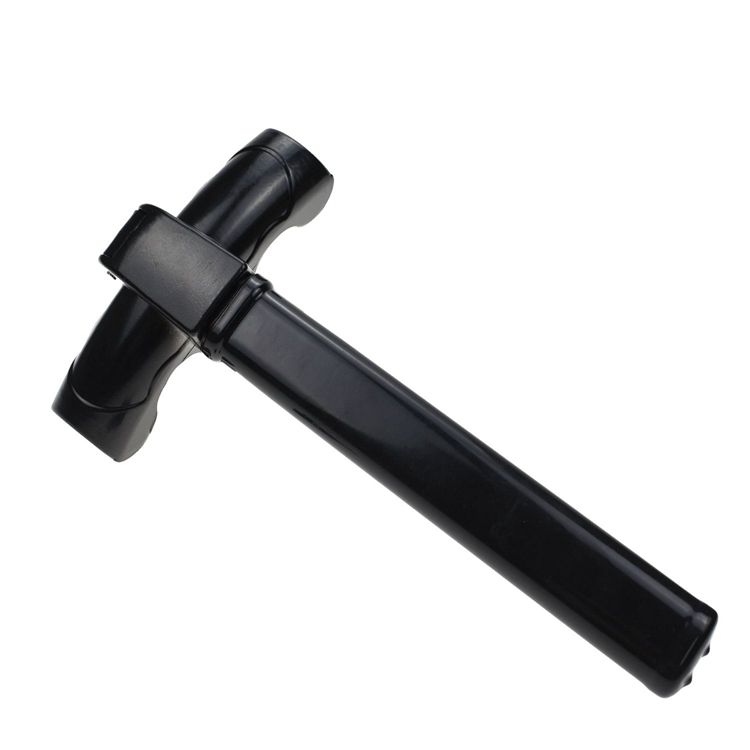
Assembly matching accuracy determines whether the whole equipment operates smoothly and quietly. Irregular die casting deformation, inconsistent hole position accuracy and non-standard interface size will cause tight assembly, loose fitting, abnormal noise and abnormal operation of mechanical structures. Precision numerical control post-processing paired with standardized die casting molding ensures each part matches standard interfaces accurately, lowers assembly rejection rate and improves overall equipment operation stability and safety performance significantly.
Key Performance Comparison of Conventional Die Casting & Premium Precision Aluminum Alloy Die Casting Parts
| Performance Index | Ordinary Low-Quality Die Casting Parts | High-Precision Custom Aluminum Die Casting Parts |
|---|---|---|
| Internal Structure | Obvious pores, shrinkage and loose tissue | Dense structure, no internal defects, high uniformity |
| Dimensional Tolerance | Large deviation, unstable batch size | Ultra-small tolerance, consistent batch precision |
| Pressure Resistance | Easy leakage and deformation under high pressure | High load resistance, stable sealing performance |
| Service Life | Short aging cycle, frequent damage | Long fatigue resistance, durable stable use |
| Surface Quality | Rough burrs, high follow-up polishing cost | Smooth flat surface, little secondary processing |
| Environmental Adaptability | Poor high & low temperature resistance | Resists corrosion, high temperature and vibration stably |
Batch consistency problem restricts large-scale supporting production heavily. Irregular quality differences between single parts cause chaotic assembly quality, uneven product performance and unstable finished product qualification rate. Mass customized die casting production adopts standardized mold management, full-process quality inspection and unified material proportion, ensuring every piece in bulk orders maintains identical precision, strength and appearance standards. This advantage greatly supports stable mass supply for automobile parts, intelligent machinery, electrical housings and industrial accessories.
Post-processing compatibility also affects actual application value deeply. High-quality aluminum die castings adapt smoothly to drilling, tapping, polishing, anodizing, painting and electroplating surface treatment processes. Inferior castings contain internal impurities, leading to paint peeling, uneven anodizing color and unstable surface coating adhesion. Standard finished parts maintain good processing performance in all surface treatment links, meeting diversified appearance and anti-corrosion requirements of different terminal products.
Long-term operation cost control relies entirely on inherent quality of die casting components. Replacing damaged parts repeatedly, stopping production for maintenance, compensating customer quality disputes all consume massive human, material and financial resources. Selecting mature, stable and high-precision aluminum alloy die casting products fundamentally reduces later failure rate, lowers comprehensive operation cost and strengthens market competitiveness of downstream finished machinery and equipment products.
All practical application experience proves that excellent die casting parts are not simple shaped aluminum products, but core basic components supporting safe, efficient and stable operation of industrial equipment. Focusing on hidden quality hazards, structural durability and batch stability rather than superficial parameters can help enterprises avoid avoidable production risks and obtain long-term reliable component supply support continuously.