


When industrial machinery operates under high temperature, heavy load and continuous working conditions, ordinary casting components often face premature wear, cracking, dimensional deviation and unstable service life. Most buyers only focus on surface price and appearance size, ignoring material uniformity, casting compactness and post-processing precision, which directly leads to frequent equipment failures, increased maintenance costs and unexpected production shutdowns. Selecting reliable precision investment casting components can fundamentally solve these hidden troubles and stabilize the overall operation efficiency of your production line.
Many engineering purchasers misunderstand that all metal castings share similar performance indicators. In fact, internal porosity, shrinkage cavities and sand inclusion defects are invisible quality hazards that cannot be detected by simple visual inspection. These tiny defects expand rapidly under repeated mechanical stress, causing parts to break suddenly during high-intensity operation. Professional foundry manufacturers adopt standardized vacuum melting, precision shell molding and non-destructive testing processes to eliminate internal defects from the source, ensuring consistent mechanical properties across every single finished product.
Professional customized casting enterprise strictly controls the whole production chain from raw material smelting, mold making, casting molding to heat treatment and finish machining. Unlike irregular small workshops that cut production procedures to reduce costs, formal factories complete multiple stress relief treatments to prevent deformation after long-term use. Strict material composition testing guarantees corrosion resistance, wear resistance and impact resistance fully match actual industrial application scenarios, avoiding mismatched material grades that cause unnecessary economic losses.
Different industrial application scenarios put completely different requirements on casting hardness, toughness, pressure resistance and high-temperature resistance. Hydraulic system parts need excellent airtightness and pressure bearing capacity, mechanical transmission parts require ultra-high wear resistance, and pipeline accessories demand outstanding corrosion and oxidation resistance. Blindly purchasing universal castings without scenario matching will greatly shorten service cycle and increase repeated replacement frequency, wasting plenty of manpower, material resources and construction time.
Long-term operational cost is far more important than one-time purchase price. Low-price inferior castings seem economical at first, but frequent replacement, equipment downtime and accidental safety hazards bring huge indirect losses. High-quality precision castings feature ultra-long stable service life, low maintenance frequency and stable dimensional accuracy, which effectively reduce overall production operating costs and improve continuous operation capacity of entire mechanical equipment.
Common Pain Points & Corresponding Solutions Of Precision Casting Products
| Common User Problems | Root Causes | Effective Solutions Provided By High-Quality Castings |
|---|---|---|
| Easy cracking under high pressure | Loose internal structure, unreasonable heat treatment | High-density integral casting, standardized quenching & tempering process |
| Poor dimensional accuracy causes assembly mismatch | Rough mold making, lack of CNC finishing | High-precision lost wax casting + multi-axis CNC machining calibration |
| Fast surface wear and short service life | Unqualified alloy ratio, insufficient hardness treatment | Optimized alloy formula, overall surface strengthening treatment |
| Leakage and air leakage in hydraulic & pipeline parts | Internal tiny pores, incomplete compactness | Vacuum casting technology + full pressure leakage testing |
| Poor adaptability in high temperature & harsh environment | Single material performance, weak weather resistance | Special heat-resistant and corrosion-resistant alloy customized production |
Hidden quality problems of metal castings are often delayed and exposed after long-term operation. Many enterprises discover serious quality issues only after parts are installed and put into production, resulting in complicated disassembly, replacement and construction delay. Non-destructive flaw detection including ultrasonic testing and X-ray inspection can check internal structure integrity without damaging finished products, ensuring zero hidden defects before delivery.
Surface treatment process also directly affects product durability. Polishing, passivation, electroplating and anti-rust coating all improve oxidation resistance and wear resistance. Unqualified surface treatment will lead to rust, peeling and corrosion in humid, corrosive and outdoor environments, further accelerating aging damage of core mechanical structures. Standardized multi-layer anti-corrosion treatment greatly extends the service cycle of cast parts in various harsh working environments.
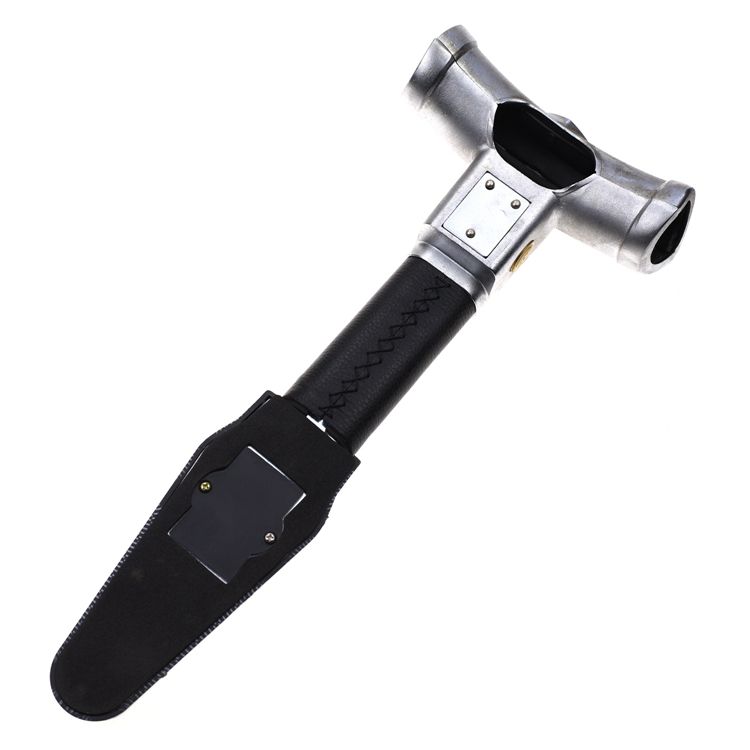
Customization flexibility determines whether cast parts can perfectly match special equipment structures. Irregular special-shaped parts, non-standard size requirements and special performance parameter adjustments all rely on mature casting technology. Mass standardized production cannot meet personalized mechanical matching demands, while professional customized casting services support drawing optimization, parameter adjustment and batch stable production to adapt diversified industrial supporting needs.
In summary, selecting qualified precision investment castings is not simply choosing products by price, but comprehensively evaluating casting technology, material quality, process completeness, testing standards and after-sales supporting capacity. Scientific and reasonable casting part selection helps enterprises reduce failure rate, stabilize production progress and improve comprehensive economic benefits, becoming an indispensable basic guarantee for stable operation of modern industrial mechanical equipment.